
Tags
Blogroll
OVERVIEW
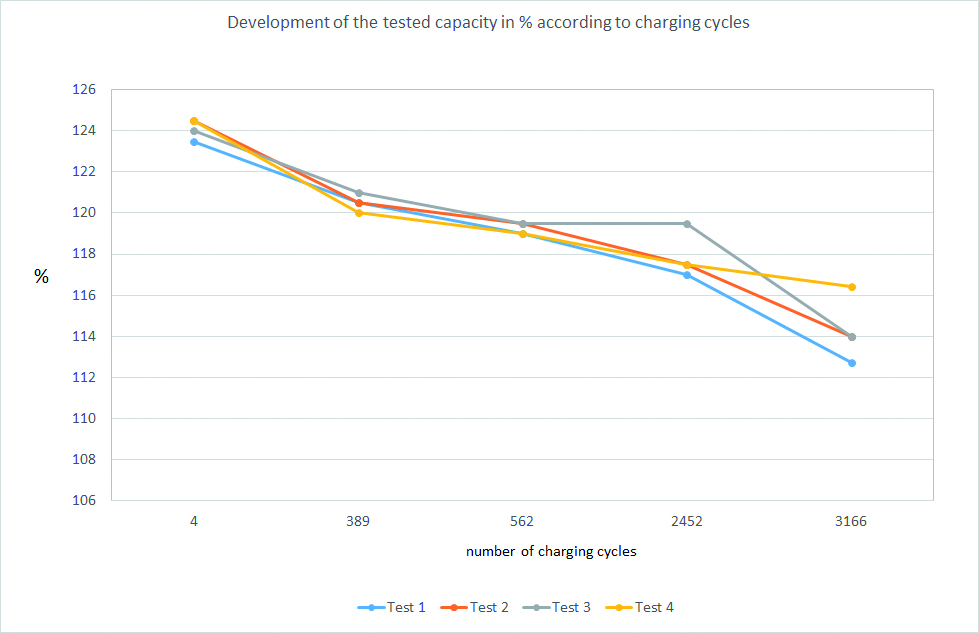
Development of the tested capacity in % according to charging cycles (Quelle: Sonnenbatterie)
The service life of energy storage solutions depends not only on cell chemistry but also on external influences. Properties which are a must for rechargeable batteries in consumer electronics and mobile applications are less relevant in stationary batteries such as solar energy storage systems. Factors like ambient temperature, depth of discharge and cycle stability have the greater impact on a storage system’s life.
Even today customers often question the durability of energy storage systems. This was shown in surveys conducted by the market research company EuPD Research among photovoltaics owners and potential buyers of energy storage systems. For example, concerns about the technological maturity and durability of these systems were cited as the main reasons for not purchasing such storage units, even though the requirements which mobile and stationary storage systems have to meet are very different. Especially storage solutions based on lithium ion technology have properties which considerably extend battery life during stationary operation.
Probably only few people know that lithium ion battery is a generic term for a whole range of different batteries of this type. They differ from each other noticeably in their chemical composition, which naturally also has an effect on their properties. Lithium cobalt batteries are, for example, frequently used in mobile devices like smartphones or notebooks because they have a very high energy density, which means they can store a lot of energy in a small space. The price for this high energy density is, however, that these batteries reach the end of their life after 300 to 500 charging cycles.
In other applications, maximum energy density is not as important as safety and durability. According to industry insiders, lithium iron phosphate (LiFePO4) is a very stable and safe compound. Experts attribute excellent suitability for use as a solar energy storage solution to this compound. “Lithium iron phosphate battery cells are very durable,” says Dr. Falko Schappacher, Manager Competence Area Aging and Safety at the MEET Battery Research Center of the University of Münster, in an interview with ees International – The Electrical Energy Storage Magazine.
This compound is a phosphate mineral which is also found in nature and was used as cathode material for lithium ion batteries for the first time in 1997. In several applications the material eliminated the need for widely used lithium cobalt cathode. According to Schappacher, LiFePO4 offers clear advantages in important aspects compared to the lithium cobalt compound: “This technology features lower material costs, improved environmental friendliness, and higher thermal stability,” the scientist confirms. Since its discovery in the nineties, the compound has become increasingly popular in the energy storage market. Following the use of LiFePO4 batteries for years in various mobile storage systems in e.g. commercial vehicles, manufacturers have offered stationary storage solutions based on this chemical compound for several years.
In the second part of the blogpost, which will be released on November, 13 2014, I will show the main aspects, which influence the durability of storage systems.
I also edited this article for „ees International – The Electrical Energy Storage Magazine“, where it has also been published.
Related Posts
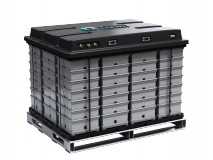
Lithium ion batteries have a high output and are durable, yet they simply remain too expensive to be widely used for storing excess solar and wind energy. Novel sodium-ion batteries could help solve this problem. Aquion Energy, a US-based company, has resolved the safety issues formerly associated with the technology and is now seeking to… read more
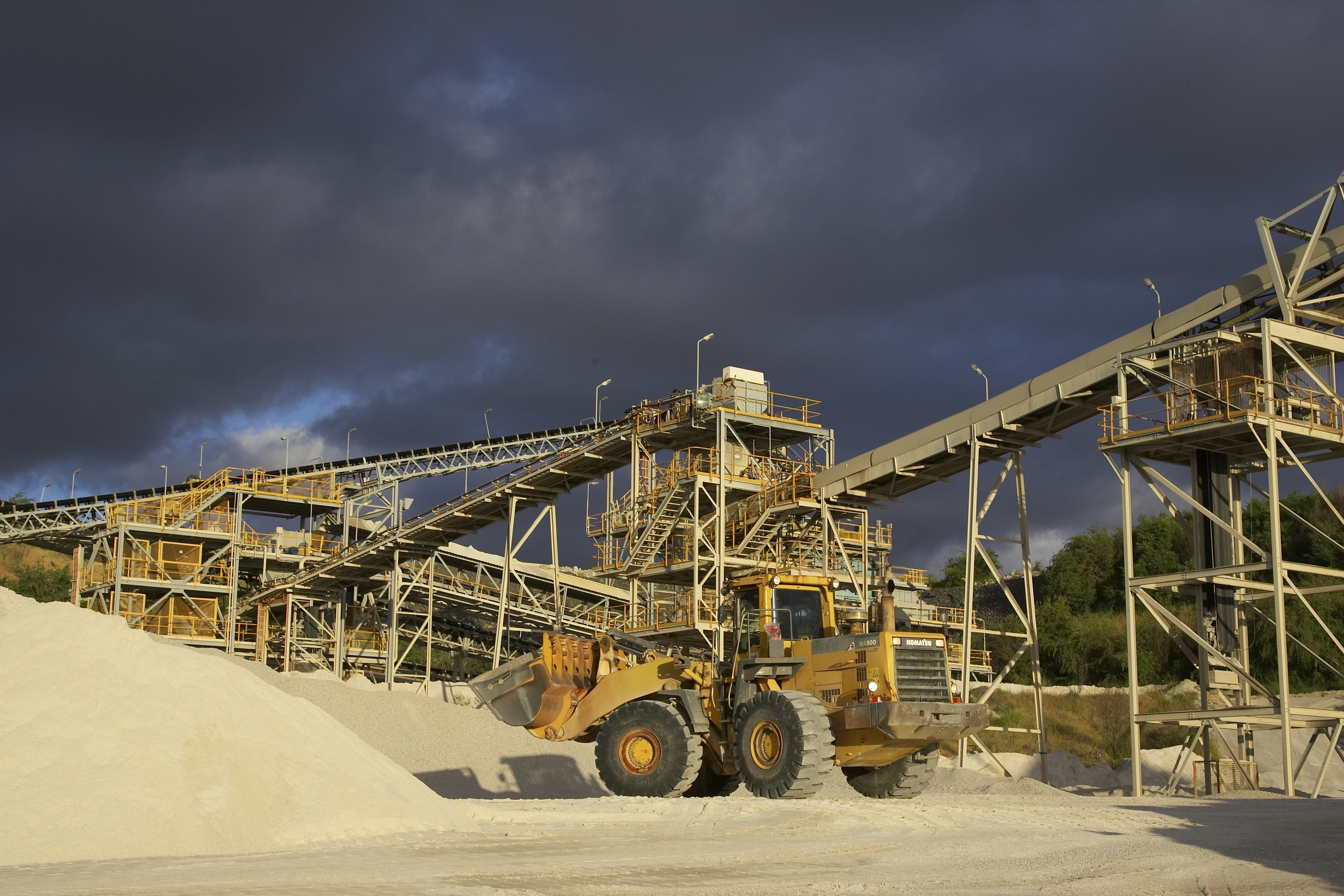
What truth lies behind the debate on the scarcity of the raw material lithium, which is increasingly important for the battery industry? Time after time the future availability of the commodity is questioned – mainly under the premise that the market for electric vehicle will gain increasing importance in the mid-term. Moreover experts disagree about… read more

1 Kommentar
Great article. I’m an electrical engineer and I have almost two years of OffGrid solar energy storage experience with LiFePO4. I developed a Solar BMS charge controller for stationary applications and after a successful Kickstarter campaign last year I designed and send to bakers for testing the first Solar BMS called SBMS4080.
Now I’ ready to do a new Kickstarter campaign for a new version SBMS100 with multiple improvements.
You can read about the new model and improvements over the last model on my webpage (just search for Electrodacus Solar BMS) and there is even a 7 day energy graph with data logged using the SBMS4080 in my OffGrid House.
Hope this dose not look like advertising not my intention the Solar BMS is fully open source HW and SW and I hope the expensive and unreliable Lead Acid will soon be replaced by LiFePO4.