Tags
Blogroll
OVERVIEW
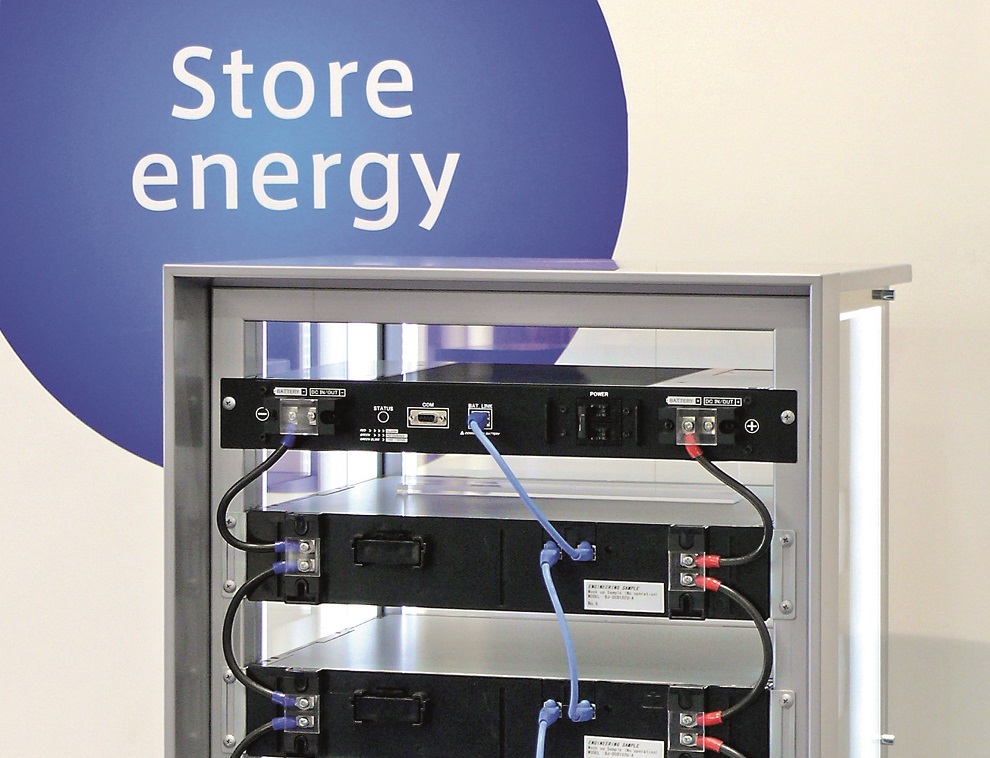
Interest in solar installations with storage systems is rising because these systems reduce consumer dependency on utility companies. So far, there has been little investment into the new technology due to high battery costs – but this may soon change: Thanks to higher production rates and technical advances, costs are sinking fast.
It’s always the same problem: You save energy but the electricity bills are still getting more expensive. Luckily, there is a solution: Solar power can be generated in Germany for 12 cents per kilowatt hour. In contrast, utilities currently charge an average of 25 cents for domestic electricity. What better reason to invest into your own photovoltaic system? Solar storage systems can increase on-site consumption by up to 70 percent. They absorb surplus solar power and pass on the energy as required – expensive grid power is hardly necessary. This makes the systems very attractive for consumers: According to an EuPD Research survey, almost 90% of solar operators are already thinking about buying an additional storage system.
Storage system providers are promising economical solutions that customers can’t refuse. Many companies are advertizing that their photovoltaic systems will remain economical despite rising electricity prices during the first twenty years of operation. Scientists, however, are skeptical as to whether these promises can be kept. Battery expert Uwe Sauer from the Institute for Power Electronics and Electrical Drives at RWTH Aachen has developed a model to calculate just how economical battery-based storage units are. It takes into consideration the efficiency of the system, the number of full cycles per year, capital costs and costs for storing power. This has rendered domestic storage systems as downright useless.
Sauer’s approach: First of all, the amount of energy the battery can absorb during its cycle life and pass on again needs to be calculated. For example, the company Deutsche Energieversorgung’s conventional lead-acid battery system may have 3,000 cycles for a capacity of 24 kilowatt hours, equaling 72,000 kilowatt hours in total. A 50% depth of discharge at which this cycle life can be achieved must be deducted. Another 80% must be deducted to cover the loss of efficiency to the whole system. During its cycle life, the battery has a capacity of around 30,000 kilowatt hours. At €6,300 for the system, storage costs come to 21 cents per kilowatt hour. If you add the 12 cents it costs to produce power on-site, the total cost comes to 33 cents. This sum is considerably higher than the current domestic electricity cost of 25 cents – meaning the system is not economical. Modern lithium-ion batteries offer even less value for money, according to Sauer’s calculations. Storage costs alone come to at least 35 cents for current systems.
According to battery expert Margarete Wohlfahrt-Mehrens from the Centre for Solar Energy and Hydrogen Research Baden-Württemberg (ZSW) the situation is not quite as dramatic as that. She currently calculates the storage costs of classic lead batteries at around 10 cents and those of lithium ion batteries at 25 cents. These costs could soon drop, as she reckons that lithium technology could also become considerably cheaper. “We estimate that storage costs will be cut by half in the next few years,” says Wohlfahrt-Mehrens. Her reasons include the development of mass production and new innovations, which are helping the industry to develop more efficient production methods and higher-performance lithium ion technologies. The cathodes and anodes of lithium ion batteries are produced by applying suspensions containing carbon and lithium as liquid electrolytes over a cylinder. It is now the manufacturer’s aim to use larger sheets to speed up the production process. In addition, companies are developing more robust and higher-performance electrode materials. Today’s batteries use graphite for the anode and lithium metal for the cathode. It serves as a chemical reactant for graphite. Manufacturers want to use new anodes made from lithium titanate in the future, which recharge faster and can withstand more load cycles than graphite.
Until economies of scale begin to take effect with more production and innovations, the German Federal Government intends to support the technology. For example, the government is considering granting low-interest loans from state bank KfW to solar installations with storage systems. Paying a subsidy of 30% of the costs for the battery is also under consideration. This would significantly reduce the payback period. Will solar batteries soon pay off or do they still have a long way to go?
Related Posts
Energy storage and grid integration are two of the areas on which efforts towards the further expansion of solar power supply are centered. The increasing share of solar power is changing the power grid. That is why efficient energy storage systems will play a vital role in overcoming the current challenges – initially by integrating… read more
Does the grid really need batteries? This is currently a very controversial question. Some experts even consider the technology to be detrimental and that’s why they are strictly rejecting Germany’s planned incentives. Fraunhofer Institute for Solar Energy Systems (ISE) counters this argument in its new Speicherstudie 2013 (study on storage systems): Batteries can actually take… read more

Kommentare (23)
The case for storage specifically in combination with PV is weaker than the general case since PV generation is roughly synchronous with peak demand and peak prices. The price of stored energy must be compared to the off-peak utility price plus lost revenue if net metering at higher rates is also available. Storage has the greatest potential when used to time shift on-peak demand to off-peak supply – this is anti-cyclic to PV capacity. Also storage which time-shifts on-peak generation to off-peak consumption has low, possibly negative, value to the utility; the only place where utilities grudgingly accept it is where their infrastructure is not capable of integrating distributed generation while government policy mandates a financial return for PV adopters. In the further future, systems facing the ‘duck’ demand curve due to extensive DG may seek storage to level demand but this is unlikely where the commercial business is built around a substantial daily variation in demand.
i am looking to give free power to the public here in Australia but it will be run off wind & i am looking for a way of storing at least 5 kw per hour what sort of batteries do i need please get back to me soon urgently .
Dave Bennett
Thank you for your request. I am sorry, that we cannot give you any recommendations concerning technologies or companies, but we would recommend to ask a profesional or to visit one of the events listed here in the blog e.g. Intersolar Europe in June.
Why don’t we use more condensators in combination with battery’s and solar energy, which would also lead to energy savings! Additionally, condensators are quite cheap!
I think it’s a good idea, especially in combination with all kinds of batterys – a condensator always adds additional capacity! We could save money with this, why is there nobody talking about it?
Even if the solar energy storage makes sense from an economic point of view for the owner of the facility, that does not mean it makes sense from a superior point of view.
The storage of energy from photovoltaic is necessarily associated with energy losses. That means that the fossil energy creation mix needs to produce the lost amount of energy with much higher emissions than photovoltaic.
In addition, if the energy from photovoltaic is stored during daytime for the use during nighttime, this operation mode does not contribute to enabling a higher share of renewable energies in the grid. Let’s have a look at the following situation: there is not much wind blowing in the morning, but the sun is shining brightly. The users of photovoltaic energy storage systems would store their energy and make it necessary to activate more fossil power plants to create the required amount of energy.
If in the evening, we have much wind and no sun shining, the users of photovoltaic energy storage systems would use their own energy while the overload of wind energy could not be used so that the wind power stations need to be partially shut down wasting renewable energy.
So in conclusion, these domestic energy storage systems would only make sense if operated from a grid perspective. But this is difficult, because the systems don’t belong to the grid operators, but the owners of the photovoltaic system.
well wind energy should use energy storage too . So on next day, if you assume the same situation like before, you can use the energy from wind storage instead of using fossil power plant energy If you have no energy storage, you will need more power lines to transport the energy. That is expensive and difficult to realize. Also you will loose energy during transportation. It is difficult to decide, what is better: storage energy or transport energy . If there would be a real free market for energy, the market could decide this by price. But we have no free market: we pay always the same price for transportation, whether the distance the energy traveled was long or short.
Hi.
Is it possible to get an insight into U. Sauer’s publication containing more details about his approach? (doesn’t have to be in English)
Blei-Säure Akkus sind nicht unproblematisch. Erstens will ich unbedingt Schwefelsäure im Wohnzimmer? Zweitens ist die Lebensdauer (eigentlich Anzahl Lade-Entlade-Zyklen) begrenzt. Wären NiFe Zellen vielleicht sinnvoller bzw. wirtschaftlicher — oder ist das veraltete Technologie?
Lead-acid accumulators are somewhat problematical. First of all, do I really want sulphuric acid in my living room? Secondly, their life (specifically the number of charge/discharge cycles) is limited. Would NiFe cells make better (economic) sense — or is that obsolete technology?
Vielen Dank für Ihren Beitrag und die interessante Frage. Tatsächlich scheinen Nickel-Eisen-Akkumulatoren gewisse Vorteile zu bieten, wie eine sehr hohe Lebensdauer. Nickel-Eisen-Akkumulatoren werden auch vereinzelt zur Stromspeicherung eingesetzt, Marktzahlen liegen uns dazu aber bislang nicht vor. Es gibt auch versuche die Technik weiterzuentwickeln (siehe http://www.dradio.de/dlf/sendungen/forschak/1916620/). In der herkömmlichen Bauweise sind die Akkus allerdings sehr schwer und enthalten ebenso wie Blei-Säure-Akkus aggressive Stoffe wie beispielsweise Kalilauge.
Thank you for your comment and the interesting question. Indeed nickel-iron batteries seem to bring certain advantages, e.g. a very long lifetime. Sometimes they are already used for solar energy storage but we have no current data on what the market share is. There is also some R&D done to further improve the technology (see http://news.stanford.edu/news/2012/june/ultrafast-edison-battery-062612.html). Still the standard nickel-iron battery is very heavy and yet not free of harmful compounds like potassium hydroxide.
Falsche Zahlen: ich verstehe die Rechnung nicht. Ein LiFePo Akku kostet heute 200 Euro pro kWh . Davon brauche ich doch aber kein 24 kWh . Bei einem normalen Haushalt sollten 5 kWh genügen. Damit kann über Nacht der Haushalt mit Strom versorgt werden. Am nächsten Tag muss eben wieder die Sonne scheinen, damit aufgeladen werden kann, oder es muss aus dem Netz gezogen werden. Ein LiFePo-Akku hat auch garantierte Zyklenfestigkeit von 6000 Zyklen bei max. 70 Prozent Entladung und entsprechender Temperierung (Sind die Zyklen flacher, steigt die Zyklenzahl). So folgt dann die Rechnung 6000 Zyklen mal 5 kWh ergibt 30 000 kWh . Der Wirkungsgrad beträgt 90 Prozent und die Entladungstiefe 70 Prozent. Also: 30 000 kWh * 0,9 * 0,7 = 18 900 kWh , die in der Lebenszeit eines Akkus geliefert werden. Kostet nun der Akku für 5 kWh: 200 * 5 plus Einbau, Mehrwertsteuer, Steuerung usw. sagen wir 2000 Euro . Dann ergibt sich 2000 Euro / 18 900 kWh = 10, 5 Cent pro kWh, die gespeichert wurde. Dazu noch die 12 Cent pro kWh für die Solaranlage liegt man schon bei 23 Cent pro kWh . Ist nicht der ganz große Gewinn, aber immerhin.
noch eine Anmerkung: Der Strom aus dem Solarspeicher kostet 23 Cent pro kWh. Der Strom aus dem Netz derzeit 25 Cent pro kWh. Dieser Preis wird innerhalb von 20 Jahren jedoch sicher steigen. Ein Durchschnittswert von 30 Cent pro kWh Strom aus dem Netz für die nächsten 20 Jahre ist sicher konservativ gerechnet. Pro kWh Strom aus dem Solarspeicher spart man also 30 -23 = 7 Cent pro kWh . Der Akku liefert in seiner Lebenszeit: 18 900 kWh . Damit 18 900 kWh * 7 Cent pro kWh = 1323 Euro Gewinn über eine Laufzeit von 20 Jahren. Man erwirtschaftet also beim Einsatz von 2000 Euro einen Gewinn von 1323 Euro. (Der Akku wurde ja schon über die 10,5 Cent pro kWh bezahlt).
Vielen Dank für die interessante Beispielrechnung! Herr Rentzing rechnet übrigens im Wesentlichen ebenso, nur mit einer anderen Speichertechnologie und unter Einbeziehung eines angenommenen Wirkungsgradverlustes wie er im Laufe der Zeit bei Blei-Säure-Speichern auftritt. Die angenommene Kapazität von 24 Kilowattstunden rührt übrigens daher, dass hier nicht von einem Einfamilienhaushalt sondern von einem beliebigen Beispielsystem ausgegangen wird, wie es auch im professionellen Umfeld eingesetzt werden kann (Industrie, Handwerk etc.).
Ich habe Probleme die Rechnung zu verstehen, vielleicht kann mir das jemand erklären. Wenn die Akkus nur 70% Entladetiefe erlauben, dann sind sie doch noch zu 30% voll wieso muss ich dann wieder 100% reinstecken um hinterher wieder 70% rauszubekommen? Dann kann man ja wohl nicht von 90% Wirkungsgrad sprechen.
Vielen Dank! UliN
Vielen Dank für Ihren Kommentar. Sie müssen zum Wiederaufladen natürlich nur die Leistung “reinstecken” die Sie vorher genutzt haben (unter Berücksichtigung des Wirkungsgrads). Die Rechnung berücksichtigt das korrekt.
Dear Sascha,
It is my opinion that the German/European government should list electrical storage as one of the highest priorities on their agenda. Germany, as no other country in the world, has shown how renewable energy can contribute to a sustainable world. The need of energy and especially electrical energy is rising every year despite all efforts to reuse, reduce, and recycle energy and materials. Another reason for the growing energy consumption is the continuing growth of the world population. Simply because we have better medical service, live healthier and get older.
The change from fossil fuel based energy towards electric energy to support the whole transport and mobility industry will have a huge impact on the need of electricity and will put more pressure on peak, but especially on off peak loads, when all cars needed to be charged.
I think that Uwe Sauer’s approach is right and has my continues support, but based on today’s technology this report just give an unrealistic picture. By using the right input data, his model will be of great help to indicate what the cost of storage will be in the near future with technology which is available soon. Transport of electrons does not come free of charge and storage could help to reduce the cost of electricity. High density grid storage batteries with a cost of less than 100 USD per kWh with efficiencies greater than 75% will be available within the next 2 years. These are the first generation commercial high density batteries which can be improved over time to become even more efficient and more economical. Take the liquid battery from AMBRI, an US based company lead by MIT Prof. Sadoway, who is one of the world’s leading experts in material science. These batteries have a theoretical unlimited life time. They are produced from materials which are highly available at a very low price. The batteries work on a temperature of 700 degrees Celsius and form liquid metal alloys which can’t break which happens with solid metal oxides layers like today’s Lithium batteries. This technology will be available by next year. The company is funded by Total, Kosla Investments and Bill Gates.
New developments on lower temperature liquid batteries are on the way, headed by another famous material science Professor Yoshida in Japan at the Kyoto University and in cooperation with Sumitomo Inc. The company claims to have the first batteries available in 2015 and the price will be 10 times less than Lithium batteries. Yet another famous expert, European material science Professor Derek Fray, invented a new technology to produce Carbon Nano Tubes(CNT) at very low cost on which a very thin layer of tin is deposited which extends the cycle time of Lithium batteries enormously and increases the electron density to extreme high levels. This will be of much help to support batteries for the car industry and tackles the problem of the high battery replacement costs, which is the most important reason why consumers hold off purchasing electric cars. Green Energy Technology is developing batteries using Mercury/Sodium-Potassium liquid alloys. These batteries have an extreme high electron density, working at near room temperature and performing with efficiencies close to 85%.
Therefore, I think that governments need to support the research in this field and that we should implement grid batteries as soon as possible. Maybe first at larger energy parks, because the input of electricity of cluster based inverters/batteries can be controlled by the energy companies using existing RF technologies and later at households level using the data of smart meters which are being implemented all over the world at this moment. Germany has headed the world in renewable energy and I sincerely hope it will lead the world of electrical storage in the same way.
Energy Independent Engineering should be a new faculty at every university.
Dick Bos
What is the thought of Tesla Motors entering into the energy storage business? They have developed a safe, market tested li battery used in thousands of cars every day now. Capacity of 60kwh or 85kwh per battery. Would Tesla be the best choice for solar energy companies to partner with as energy storage market expands? I imagine the price per unit would come down as Tesla produces more and more cars, creating economies of scale, so tough to ignore as a potential supplier with competitive pricing.
Die Forderung an die Hersteller lässt sich einfach berechnen: Wenn täglich eine kWh über den Speicher rein und raus fließt und dies über 10 Jahre Lebenszeit der Anlage, dann dürfen Investitions- und Betriebskosten nicht höher sein als der im Zeitraum bezogene Strom (0,375 €/kWh) abzüglich der Erzeugungskosten (0,125 €/kWh) durch den Generator. Ein Beispiel dazu:
1 kWh * 3650 Tage * (0,375 – 0,125) €/kWh = 912,50 €. Es stehen also knapp 1.000,- € zur Verfügung für jede Kilowattstunde genutzter Speicherkapazität incl. Batterieladegerät, -wechselrichter, Installations- und Betriebskosten.
Wir haben das auch einmal nachgerechnet. Für Blei-Akkus mit (sehr optimistisch geschätzten) 5000 Ladezyklen haben wir für die theoretische Speichermenge eines Akkus mit einer Speicherkapazität von 10 kWh folglich insgesamt 50.000 kWh angenommen. Dies haben wir mit der Entladungstiefe von 70% und einem Systemwirkungsgrad von 90% mulitipliziert. So ergibt sich ein insgesamt nutzbares Speichervolumen von 31.500 kWh. Pro kWh gespeicherten Solarstrom müssen also für einen Blei-Speicher für 8.000 Euro rund 25 Cents zusätzlich aufgewendet werden. Weitere Infos: http://www.energie-experten.org/experte/meldung-anzeigen/news/speicherfoerderung-lohnt-sich-jetzt-ein-solarstromspeicher-4161.html Das deckt sich doch eher mit den Erkenntnissen des Instituts für Stromrichtertechnik und Elektrische Antriebe der RWTH Aachen. Für die Nachrüstung, so unser Fazit, ist die Speicherförderung eher uninteressant. Bei jetzigen Neuanschaffungen wohl nur, wenn man von deutlich steigenden Strompreisen zukünftig ausgeht. Dann kann zunächst in das Stromnetz eingespeist werden und erst später der Eigenverbrauchsanteil des Solarstroms über den Speicher sukzessive erhöht werden. Ansonsten ist wohl “Abwarten” die beste Alternative, wenn man den Worten von Frau Wohlfahrt-Mehrens vom Zentrum für Sonnenenergie- und Wasserstoff-Forschung Baden-Württemberg Glauben schenken mag.
Zwei Korrekturen zum obigen, sehr interessanten Artikel: Die zitierte Dame vom ZSW heißt mit Vornamen nicht Margarete sondern Margret und nicht die Wirkungsgradverluste betragen 80% sondern der Wirkungsgrad und folglich die Verluste 20%.
Darüber hinaus halte ich die Zahlen von Dr. Margret Wohlfahrt-Mehrens für sehr optimistisch. Es wäre interessant zu erfahren, wie Sie zu den Zahlen von 10 Cent / kWh bzw. 25 Cent / kWh kommt.
Wirklich spannende Frage. Bei Abwägung aller Kosten und Kostensenkungspotenziale wird an der Lithium-Ionen-Technik jedoch kein Weg vorbei führen. Und hier erscheinen mir die Zahlen der vom Autor erwähnten Wissenschaftlerin sehr plausibel: 2015 werden sich Eigenstromlösungen auf Liion-Basis sicher lohnen. Zumal mit der jetzt beschlossenen Förderung. Und zumal vor dem Hintergrund, dass F&E im Batteriebereich mit der großen Marktvision jetzt massiv hochgefahren werden.
My company, PWR is working with a UK li-ion supplier & we have “run the numbers” for Germany. Based on a (for example) 3.5kWp PV system (yes I know a bit small) and 7kWhrs of li-ions storage, payback over 20 years is a positive Euro3000 (discount rate 3%). This is predicated on a battery li-ion cost of around Euro580/kWhr – this price can be delivered in reasonable volume (hundreds per month). Cost covers BMS and batt pack but not the inverter.
Cycle life of perhaps 4000 cycles. It is worth remembering that in the residential sector the battery will not do 365 full cycles/year. This has a big impact on batt life and we estimate that a typical year will have a full cycle equivalent of around 220 so you can see that 20 years is possible. With on-line cell monitoring it is pretty easy to see if individual cells are degrading.thus allowing replacement.
Given the above, one needs to ask the question: why subsidies for residential storage in Germany given that there is positive payback right now. Anyway, key point: storage prices are such as to justify installation both in the residential sector on “on-network” right now.
Sauer’s analysis on batteries as presented by Sascha above could be quite correct but what is omitted is that the price of electricity from PV+Batteries is fixed for the next 25 years (depending upon life of components) . So , yes , it is expensive for now but where will grid price be in 25 years time ?
As a private citizen in Cape Town I have had rooftop PV with lead acid batteries with as much self-consumption as possible for four years, and only exporting into the grid the unused surplus (with zero compensation) . Thus I only start exporting after midday after recharging my batteries all morning . There is no massive midday export into the grid at all . Over a year our PV supplies about 82% of our electrical energy requirement . The utility does not like this loss of sales !
Batteries for residential applications will be judged on cost. The peak power should satisfy the homes maximum draw, but the energy storage should be able to deliver peak power for 15 minutes. That time is based on the time it takes auxiliary peakers to come on line, or for the pumped storage or compressed air storage systems to begin delivering power. The commonly used size for the battery store is 25 kWh and a peak power of 5 kW. The cost of the energy storage system will be $2,500 or less in a few years. The homeowner will experience much more reliable source of power from its provider.