Tags
OVERVIEW
The future of our energy supply is in the hands of renewable energy. Since there is not only a disparity between energy generation and consumption in terms of location but also in terms of time, as the proportion of renewable energy in the overall amount of power generated grows so does the need to store this green energy.
It therefore goes without question that this sector holds enormous long-term potential. The some 5,000 solar storage systems that have so far been fitted alongside small and medium-sized PV roof-mounted installations in 2013 are only a first step towards unlocking this potential. The contribution of such small storage devices to the energy transition is limited, and the question may arise as to what extent their installation makes sense on a macroeconomic level.
It should nevertheless be noted that such systems are already in demand and thus a market has emerged for them. This means that these storage systems can be spoken of in terms of an actual market already in existence rather than only with regards to their long-term prospects.
Experts estimate that around 5,000 new systems will be installed in 2013, meaning that a good 7% of the PV systems in the relevant size categories installed in 2013 will be equipped with a storage device. The total storage capacity of these systems amounts to approximately 25 megawatt hours (MWh). To date, a system comprising a PV plant and storage device is, however, only economically feasible thanks to PV plants being able to use feed-in tariffs to cross finance storage devices.
Those choosing to purchase a storage device therefore choose to put profitability on the back burner in order to have a self-sufficient energy supply. Additional significant price reductions are essential for storage systems to become economically viable in the future without this “cross financing”. However, all current analyses estimate that this will not be on the cards for a number of years. It is therefore hardly surprising that the majority of PV customers participating in a recent end customer survey conducted by EuPD Research name these high prices as the greatest barrier to installing a storage device.
While these cost reductions require time, market participants should already be asking themselves which further wheels could be put into motion in order to stimulate demand. Examples include actively talking to end customers and informing them of the option of installing a storage system.
It is not only a matter of price
Consumers also harbor significant reservations regarding the technical readiness of storage systems already found on the market. These doubts are justified given the fact that storage devices working in combination with PV installations are a relatively “new” product. Steps must be taken to convince customers that the technology has been sufficiently tested and is fully developed. To this end, manufacturers should ask installers to do more to make the most of their proximity to end customers, as to date installation enterprises have not taken their role of informing customers of the options available to them seriously enough.
Fewer than half of the customers (45%) who installed a PV system in 2013 were actively spoken to by their PV installer about the topic of energy storage, while more than two thirds of those who had not been approached in this way wished that their installer had done so. Using installers to target customers in this way has been found to be an extremely successful strategy. The success rate, i.e. the successful installation of a storage device, stands at 8.6% among customers who are approached in this way and at 4.9% among those who are not.
Projecting these figures onto the entire market equates to a total of 7,000 storage systems being sold in 2013 in comparison to the 5,000 sales estimated by experts. This corresponds to a pleasing increase of 29%.
Existing installations – an underestimated area?
It has been deduced that using installers to talk to customers is a highly effective way of boosting demand. In terms of new customers, i.e. all those who installed a PV system in 2013, this is achieved in around half of all cases. However, when it comes to existing customers, this figure stands at just 22% for the installation years 2011/12 and at a mere 10% for installation years before 2011.
However, two thirds of system operators wish that their installer had actively informed them of the possibility of using solar storage systems. The high feed-in tariffs enjoyed in the past, which until 2011 were much greater than the electricity price, are likely to be one of the reasons why installers “left these existing customers in the dark”.
However, by taking into account the on-site consumption bonus of 2009 to 2011 and calculating the resulting level of profitability, it quickly becomes clear that retrofitting PV systems is without a doubt a viable option. Installing a storage device is, at least relatively speaking, equally as profitable from an economic standpoint for customers from the years 2009 to 2011 as for those fitting a PV system in 2013 when storage incentives are taken into account.
In the medium term, it is in any case to be assumed that existing customers will be the more important target group. Around 70,000 PV systems in the size category enabling the use of storage devices are currently installed each year. In 2014, these 70,000 new systems come up against around 550,000 existing installations, while in 2016 this figure is expected to rise to more than 700,000. If in 2016 30% of the newly installed PV systems were to be fitted with a storage device and in the same period only 3% of the existing systems were to be retrofitted with such a device, the retrofitting market would in absolute terms be larger than that for new installations.
Related Posts

Since May 1, the German government has been supporting the purchase of solar storage systems by awarding grants of up to €660 per kilowatt (kW) of a solar system’s installed capacity. It is important to note that the subsidy must be applied for via your principal bank before the storage system has been bought. Government… read more
Energy storage and grid integration are two of the areas on which efforts towards the further expansion of solar power supply are centered. The increasing share of solar power is changing the power grid. That is why efficient energy storage systems will play a vital role in overcoming the current challenges – initially by integrating… read more
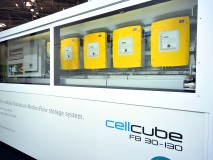
For photovoltaics to play a leading role in the energy transition, energy storage systems need to reduce the burden on the grid and provide operating reserves, as well as being equipped with an intelligent energy management system that coordinates their usage. Will the industry succeed in developing the necessary technical solutions? In a renewable power… read more

Kommentare (3)
Renewables Storage – The Next \”Whitegood\”
There are two distinct tracks materializing in the renewable’s industry, the first is the consumer driven rooftop solar market and the second is the large scale wind and solar markets driven primarily by investment firms looking to place their money with predictable results .Both have, and will continue to have variable challenges to deployment and long term financial returns.
The most significant and common factor between both camps is the dispatchability of renewables, the key conquering both technical and financial barriers to comprehensive deployment. The ability to produce and store electricity, then discharge this energy at key times me ans that peak demand can be reduced and in the medium term high import costs can be avoided.
In Germany, the impacts of particularly rooftop solar have only now become a significant burden on existing electrical infrastructure, in the main because of the huge amount of it. One place that has had technical issues since the solar boom begun is Australia. Ninety percent of Australia’s population is concentrated on a narrow strip of eastern seaboard, which is home to more than one and three quarter million roof-top solar systems. As far back as 2009, distributors were refusing connections based on voltage rise and reverse flow in their networks. At this time a small firm based in Queensland embarked on a cost effective method of time-shifting solar energy delivery based purely on overcoming the technical barriers preventing the installation of solar PV.
During this early stage state governments were offering extremely generous feed-in tariffs, which would encourage a customer to invest in whatever additional technology was necessary to gain access these tariffs. The challenge was to find a way of storing 5 or 10 kilowatt hours of energy to time shift into the evening peak, and gain distributor approval, at a cost that the customer could bear. In late 2010 the firm released it’s LifePo4 based system to what had become a completely changed market, the generous feed-in tariffs had suddenly disappeared, and the technical solutions now became a financial imperative.
Significantly this increased the potential market ten fold and co-coincided with the entry of a lot of offerings from storage companies such as Power Router and others. Unfortunately, most of the early offerings were way too expensive, and remain so for most domestic solar customers. The small firm in Queensland continued to refine it’s offering and without changing it’s initial design, has produced a true consumer solution to time shifting the delivery of renewables, primarily solar PV, at a fraction of the cost of other offerings. The key is mass production combined with the unique placement of the storage in the system. The units are connected directly to the output of the solar modules, through some very sophisticated but low cost buck-boosts DC-DC conversion at high voltages, the system can capture any amount of solar PV production and dispatch via the standard grid connect inverter, to achieve revenue and/or demand management objectives of the consumer.
The cost is the other winner, the units a re sold under a managed model, meaning the storage core is owned by the supplier and maintained and or replaced over an indefinite lifespan. Initial upfront costs are 3000 euros for the 5KWH unit and 5000 Euros for the 10KWH unit. In addition to this a 10% annual service charge is payable, covering scheduled maintenance, breakdown service and renewal of the core.
The inherent safety benefits of a high voltage/low current design means that the units can be installed anywhere within a domestic situation w ithout arc/gas or other restrictive factors coming into play. This article is meant to be informative rather than a marketing exercise. More information is available at http://www.sunsink.com.au. The device will be demonstrated at Intersolar 2014 in Munich.
Very interesting read as Norfolk Island has been very active in the installation of PV’s into the private home, so much that during peak sun periods too much excess PV is generated and passed back into the electricity grid thus making the electricity department having to install shedding devices to ensure that the system does not fail. This is not only a waste of renewal energy but does not bring down the cost of production as much as it should have. Norfolk Island at this time is actively attempting to establish whether or not a 5-10Mw storage system is avail, to alleviate the problem and to ensure that the PV generation of electricity is fully utilised within the grid. This has created such a problem that we have had to prohibit persons installing new systems until the problem is rectified. The sooner that large storage systems are available for this storage, the world (and Norfolk Island) can make use of its potential.
It is truly encouraging that we can now see momentum in this industry so that innovations can be multiplied, trickling down to the common man so that they can adopt green living as well. Thanks for publishing this!