Tags
OVERVIEW
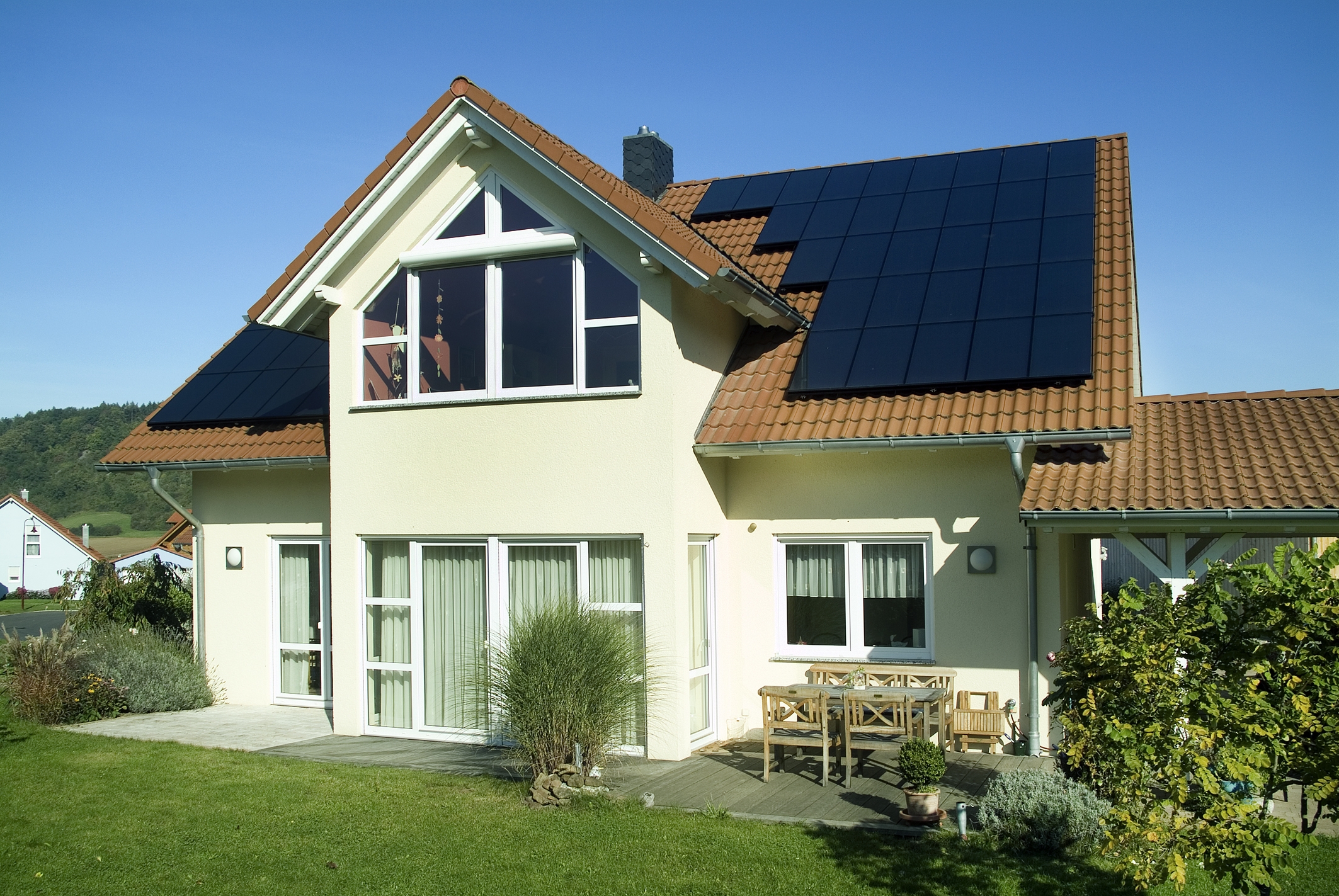
Private house with solar system. Foto: Würth Solar
Solar energy storage devices and heat pumps, in combination with small object-bound PV systems, can make an important contribution to the significant increase in internal consumption, the integration of renewable energy into the electricity grid, and to the establishment of smart grids. Another key requirement is for electrical and thermal storage to operate intelligently. This was found to be the conclusion of the “Storage Study 2013” by the Fraunhofer Institute for Solar Energy Systems ISE and in a recent study by the Centre for Solar Energy and Hydrogen Research Baden-Württemberg (ZSW), which has examined the consumption potential of heat pumps and solar power storage.
Proper network operation is a must to help provide support
According to the Storage Study 2013, which gave a short appraisal of the assessment and classification of the energy industry and the economic and other effects of object-bound electrochemical storage, an intelligent network that provides support to the network operation is a mandatory requirement in order to significantly save solar power, to stabilize the grid voltage, and to reduce the peaks in solar power production by up to 40% depending on the power of the PV system, the local power load, and the battery size. The same applies to the feedback from the storage device into the electricity grid, which can further increase the relevant network effects. Thus, new port capacity can be obtained for the further development of renewable energy and for stabilization of prices in the electricity market.
PV power with power saving must rise significantly
Fraunhofer ISE suggests to gradually transform the conventional battery management, which previously has been based on very simple, locally-oriented management requirements, into an intelligent energy management. The smart operation of solar power storage operators should then combine local interests with systematic demands from the grid or operation of global production and exchange of fluctuating loads. The effective adoption of network-related system services (usually power reserve, reactive power, voltage support, stand-alone operation) can only be achieved, however, if the total power of installed PV solar power systems with storage increases significantly, according to Fraunhofer ISE. The same is true for the effects of the formation of the exchange or the effect of the EEG apportionment mechanism.
Solar power storage and intelligent heat pumps
Thermal storage also offers similar potential via intelligently-controlled heat pumps. These heat pumps can increase the allowable consumption by 30-45% for a family of four with a PV system that generates 4,000 kWh of green electricity per year without further aid. If an additional solar power storage with 5 kWh energy is integrated, the consumption can be increased up to 70%. This is explained in further detail in the findings in the ZSW’s study of the consumption potential of heat pumps and solar power storage. The scientists showed that in order to achieve these benefits, intelligent control of the heat pump and an optimized battery are required.
Related Posts
Energy storage and grid integration are two of the areas on which efforts towards the further expansion of solar power supply are centered. The increasing share of solar power is changing the power grid. That is why efficient energy storage systems will play a vital role in overcoming the current challenges – initially by integrating… read more
Does the grid really need batteries? This is currently a very controversial question. Some experts even consider the technology to be detrimental and that’s why they are strictly rejecting Germany’s planned incentives. Fraunhofer Institute for Solar Energy Systems (ISE) counters this argument in its new Speicherstudie 2013 (study on storage systems): Batteries can actually take… read more
With their tried-and-tested technology and relatively low purchase price, lead-acid batteries should, for all intents and purposes, be playing a key role in the up-and-coming market for photovoltaic storage systems. However, the majority of suppliers are putting their trust in the less thoroughly tested yet higher-performance lithium-ion batteries instead. Will lead-acid storage systems become obsolete… read more
