Tags
Blogroll
OVERVIEW
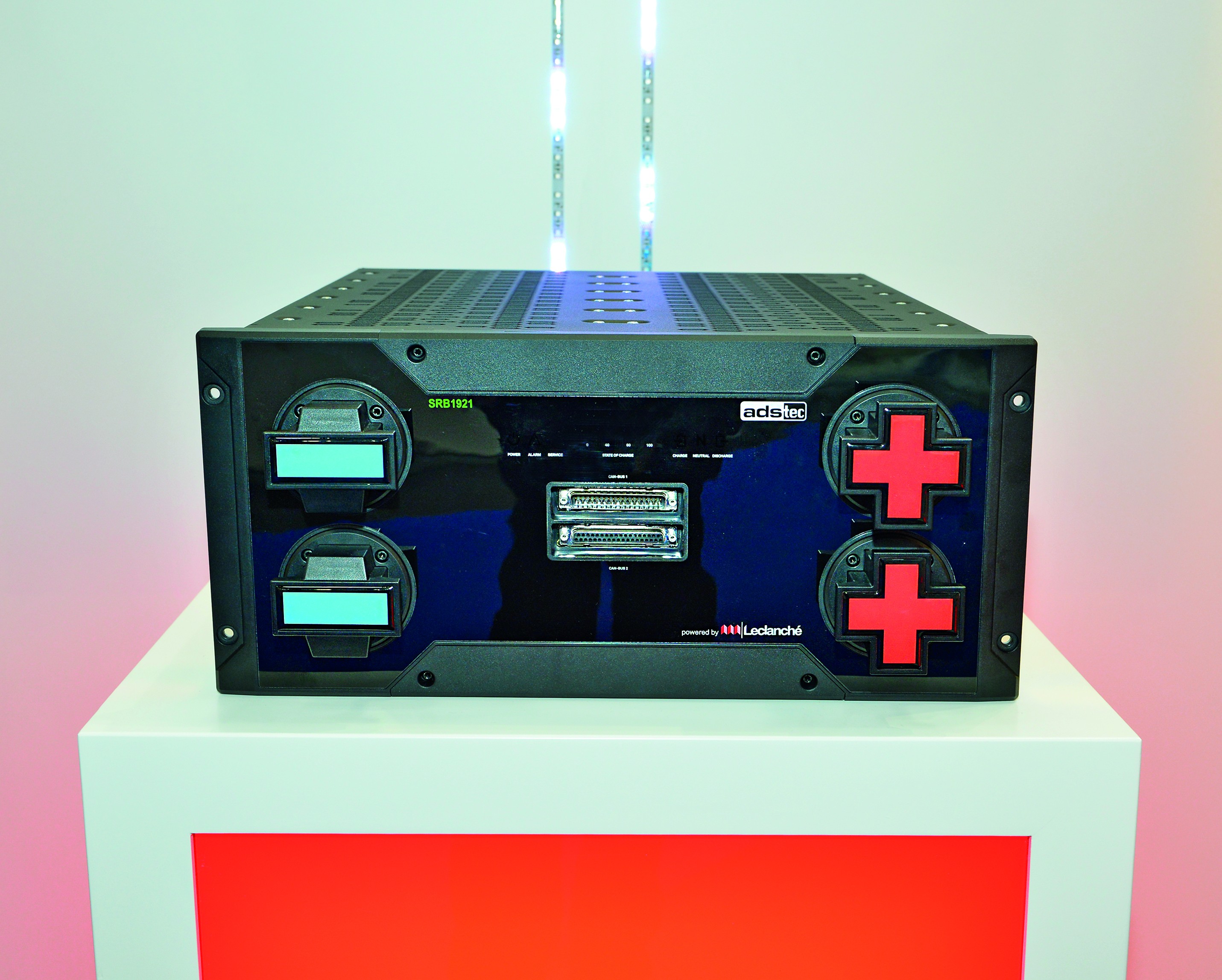
Energy Storage in the Focus of Intersolar Europe, Munich, June 19–21, 2013 (Source: Solar Promotion GmbH)
Those who equip photovoltaic installations with a storage system are mostly interested in increasing the on-site consumption of generated solar power. However, people often forget to consider that these kinds of battery systems only reveal their full potential through their multiple uses. In addition to allowing operators of photovoltaic installations to significantly increase on-site consumption, a storage system also enables them to reduce their dependency on utility companies and ensures that power will continue to be supplied without interruption should the public power grid temporarily fail. Battery storage systems have long been common practice in off-grid photovoltaic installations (otherwise known as stand-alone solutions) in order to ensure that power is continuously supplied without interruption. In contrast, the use of storage systems in grid-connected solar installations, which are the norm for installations on private roofs and commercial businesses, is still a relatively new phenomenon. Electricity storage systems that are available on the market are suitable for use when retrofitting existing photovoltaic installations and can also be factored into the system design when planning new installations. All storage systems save excess energy and put it at the disposal of consumers at a later point in time.
Solar modules generate direct current, which is converted into alternating current by an inverter before being fed into the public power grid or being used by domestic power consumers. Battery storage systems can be integrated into both the direct current and alternating current sides of the installation.
If the operator knows that a storage system is required before construction works begin, the system will normally be integrated into the direct current side of the installation. This reduces investment costs, achieves a higher efficiency, and allows module output and storage capacity to be coordinated with each other in the system design. Specific inverters with an integrated charge and discharge control directly charge the (integrated) battery with solar energy. They also convert it into alternating current if the temporarily stored solar energy is to be used by power consumers at a later point. In principal, it is possible to integrate storage systems into the direct current side even when retrofitting existing installations. If the inverter present does not have the necessary configuration, then the battery can also operate with the help of an external charge controller.
In addition to the battery, a specific battery inverter must be installed for the storage system to be integrated into the alternating current circuit. This inverter converts alternating current into direct current, which is required for charging the accumulator. The disadvantage to this solution is that further losses occur when converting back from alternating current into direct current, thus minimizing the system’s efficiency. On the other hand, the plant operator has significantly more choice when choosing the battery capacity, which is advantageous, for example, if module output in an existing installation is given as a set amount.
The controller regulates the amount of generated power that is fed into the public power grid, the amount used to charge the storage system and the amount that is delivered directly to domestic power consumers. Normally, the controller is programmed to maximize the on-site consumption of electricity generated in the photovoltaic installation. Storage systems can contribute significantly to this by temporarily shifting the supply. Alongside load management on the part of the consumer, stabilizing the power grids could also increasingly codetermine the storage systems’ management in the future. In this case, storage system operators provide decentralized capacities, which are integrated into an intelligent power grid, and they are then remunerated as part of a capacity-dependent energy market.
Related Posts
Energy storage and grid integration are two of the areas on which efforts towards the further expansion of solar power supply are centered. The increasing share of solar power is changing the power grid. That is why efficient energy storage systems will play a vital role in overcoming the current challenges – initially by integrating… read more
Interest in solar installations with storage systems is rising because these systems reduce consumer dependency on utility companies. So far, there has been little investment into the new technology due to high battery costs – but this may soon change: Thanks to higher production rates and technical advances, costs are sinking fast. It’s always the… read more

Since May 1, the German government has been supporting the purchase of solar storage systems by awarding grants of up to €660 per kilowatt (kW) of a solar system’s installed capacity. It is important to note that the subsidy must be applied for via your principal bank before the storage system has been bought. Government… read more

Kommentare (9)
Ich bin auf der Suche nach einer effizienten Solar/Wind-Energiespeicherung für den Bedarf eines Einfamilienhauses in Spanien, und dabei fast zu verzweifeln, weil alle Auskünfte in verschiedene Richtungen gehen (siehe z.B. Blog oben). Was können Sie mir empfehlen bzw. an wen soll ich mich wenden?
herzlichen Dank für Ihre Bemühungen im voraus.
Hallo Herr Sailer,
natürlich können wir hier nur schlecht einen bestimmten Anbieter empfehlen. Ich würde Ihnen aber auf jeden Fall raten, sich mit dieser Frage an einen erfahrenen Installateur/Solarteur zu wenden, da es dabei tatsächlich einiges zu beachten gibt. Am Ende hat jede Technologie ihre Vor- und Nachteile. Wenn Ihr System aber gut auf Ihre Bedürfnisse abgestimmt wird, ist – zumindest bei kleineren privaten Anlagen – die Technologie der Batteriespeicher aber eher zweitrangig.
Viele Grüße,
Robert Schwarzenböck
We are developing a pseudocapacitor with anode of active carbon made from biomass pyrolysis, cathode made of cheap pigments, water based electrolyte PH neutral.
Very safe and cheap… and green.
>30.000 cycles
No BMS.
High power density, 5Kw/Kg.
30-35Wh/Kg for land-storage
Hello Mario
I saw yuor comment, that you developing a storage system. It sounds very interesting.
Can you send more details?
Mail: [email protected]
Peter
We are developing a pseudocapacitor with anode of active carbon made from biomass pyrolysis, cathode made of cheap pigments, water based electrolyte PH neutral.
Very safe and cheap… and green.
>30.000 cycles
No BMS.
High power density, 5Kw/Kg.
30-35Wh/Kg for land-storage
Please contact me regarding this battery.
Lars
@Darin, FES (Flywheel energy storage) has very poor kWh capacity, and a very long ROI time, therefore FES are not suitable for this application.
Regards,
Mario
Die Anwendung ist möglich, wenn der Solarstromspeicher DC-seitig an den vorhandenen Wechselrichter angebunden wird.
Gerne zeigen wir Ihnen wie.
Yes,
You could invest in batteries. However, given the instability of solar output, in this case meaning second by second the output is very saw-toothed, at best, batteries are probably not a good solution. They are, surprisingly, the solution you will be steered toward. You’d do much better with a fast cycling, massive cycle number, solution. I’d suggest Beacon’s FES (flywheel energy storage) except that they are ill suited for small, <1MW, solutions, and have very large losses.
What you need is a next generation FES, cheap, efficient, cycle indifferent, etc. So, can you wait 2 years?
I have two (2) arrays which are grid connected one array catches the rising sun the other the setting sun but after that because I have no storage facilities I revert to utility supply. Can a storage system be wired into the existing system and what would be the probable cost?