Tags
OVERVIEW
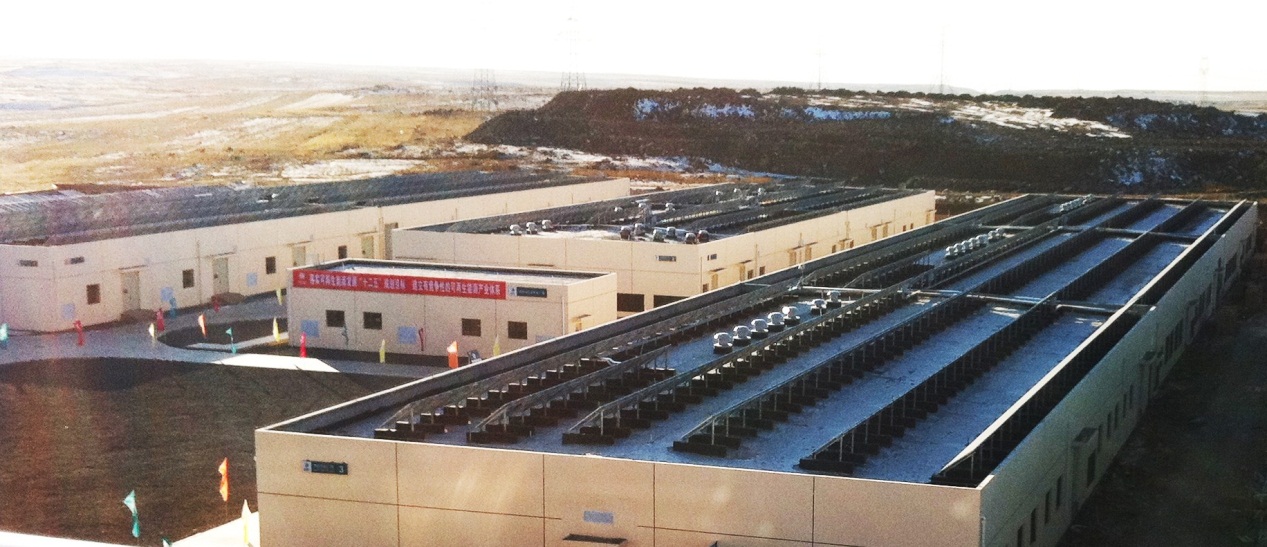
China’s National Wind and Solar Energy Storage and Transmission Demonstration Project in Zhangbei - Source: State Grid
The Middle Kingdom holds a central position for the global energy storage market. A potential of 1.4 billion electricity consumers, aggressive renewable energy targets and vast remote areas are excellent preconditions for the deployment of storage solutions in China. So, what is current status of storage solutions in China and which actions does the government take to make use of this opportunity.
The development of the energy storage industry began relatively late in China. Within the last two years however, the industry has seen rapid developments including growing battery production capacities and increasing storage installations.
Today battery production in China is mainly focusing on leadacid, lithium-ion and flow batteries. Besides a vast amount of lead battery producers, there are over 100 lithium-ion battery manufacturers in the country, many focusing on lithium iron phosphate, such as BYD, China Aviation Lithium Battery (CALB) and Lishen. These firms are targeting the grid scale energy storage and electric vehicle markets with the same battery technology.
There are also a number of Chinese companies offering vanadium redox flow battery systems such as Prudent Energy, Rongke Power and Chaoyang Huading.
Besides its variety of battery production capacities, China is recently facing an increase of energy storage installations.
According to the China Energy Storage Alliance’s (CNESA) statistics, the installed capacity of operational electrochemical battery energy storage projects in China reached 57.3 MW by June of 2014, adding 5 MW from the beginning of the year.
Taking also projects into account, which are already planned or under construction, the number of electrochemical battery energy storage projects sums up to 90 with a cumulative capacity of 90MW.
Looking at their type of use, the projects aim at a variety of different applications like renewable energy integration, distributed generation, micro grids and electric vehicle charging.
The largest portion of todays installed storage capacity in China constitutes the country’s “National Wind and Solar Energy Storage and Transmission Demonstration Project” in Zhangbei including four lithium iron phosphate battery projects totaling 14 MW and a 2 MW vanadium redox flow battery in operation since late 2011.
Regarding solar integration projects on islands and in remote regions that otherwise rely on imported diesel for power generation, lead-acid batteries, and advanced lead-acid batteries in particular, have been a popular choice for project developers.
Such as Chinese vendor Narada has had successful projects using its lead carbon batteries in projects. This applies to its 1 MWh installation for a solar PV-plusenergy storage micro grid project in the western Chinese province Xinjiang and two projects totaling 2.5 MW for a grid-connected island micro grid system on Lu Xi island near Wenzhou.
Also flow battery technology is growing in popularity among project developers in China. A number of wind farm projects have been equipped with energy storage in China’s wind-rich northeastern provinces.
Based on China’s 2020 national targets, a recent forecast of CNESA expects a total installed storage capacity of 130 GW over the next six years including pumped hydro energy storage.
Table: China energy storage market forecasts for 2020 by application

Source: CNESA
Is energy storage deployment in China self-propelling?
Definitely the answer to this question is no. The future of storage applications in China rests on the establishment of supporting policies in order to achieve the full effect of their benefits for the country’s electricity infrastructure.
Energy storage charging and discharging tariffs must be structured in a way that recognizes the multiple benefit streams that can be achieved through the flexibility of storage resources.
The Chinese government is only gradually realizing the need for action and recent policy targets are even aggravating the situation.
The 12th 5 Year Plan (2011 – 2015), China’s high-level planning document called for electricity access for all 1.4 billion Chinese citizens, including those in remote areas and island communities.
At the same time China is striving ambitious renewable energy goals for the end of this decade: a total of 100 GW of installed wind capacity by 2015 and 200 GW by 2020; and 35 GW of installed solar capacity by 2015 and 50 GW by 2020!
These two targets mark a huge challenge for the stability of China’s electric power network, which is already today the largest network in world, both in terms of installed generation capacity and total electricity produced.
The healthy transition to green and renewable sources of energy in China will therefore require the flexibility and accuracy that energy storage is capable of providing.
In combination with experienced technology vendors and a demand from multiple application areas, China’s energy storage market is in a very good starting situation for strong growth in the coming years. Thus clear governmental support schemes could even accelerate storage deployment in China.
My post is based on an article by the Chinese Energy Storage Alliance (CNESA), which was published in „ees International – The Electrical Energy Storage Magazine“ issue 03|2014.
Related Posts
Flexible use, easy modular expandability as well as cost efficiency and nonuse of toxic materials. These are crucial features, which have to be addressed by the manufacturers to further boost the deployment of electrical energy storage solutions. In order to illustrate the efforts of the industry to meet these needs, we will shed light on… read more
For photovoltaics to play a leading role in the energy transition, energy storage systems need to reduce the burden on the grid and provide operating reserves, as well as being equipped with an intelligent energy management system that coordinates their usage. Will the industry succeed in developing the necessary technical solutions? In a renewable power… read more
